Submarines
Association
Australia
Vale


SubmarinesAssociationAustraliaVale |
|
|
|

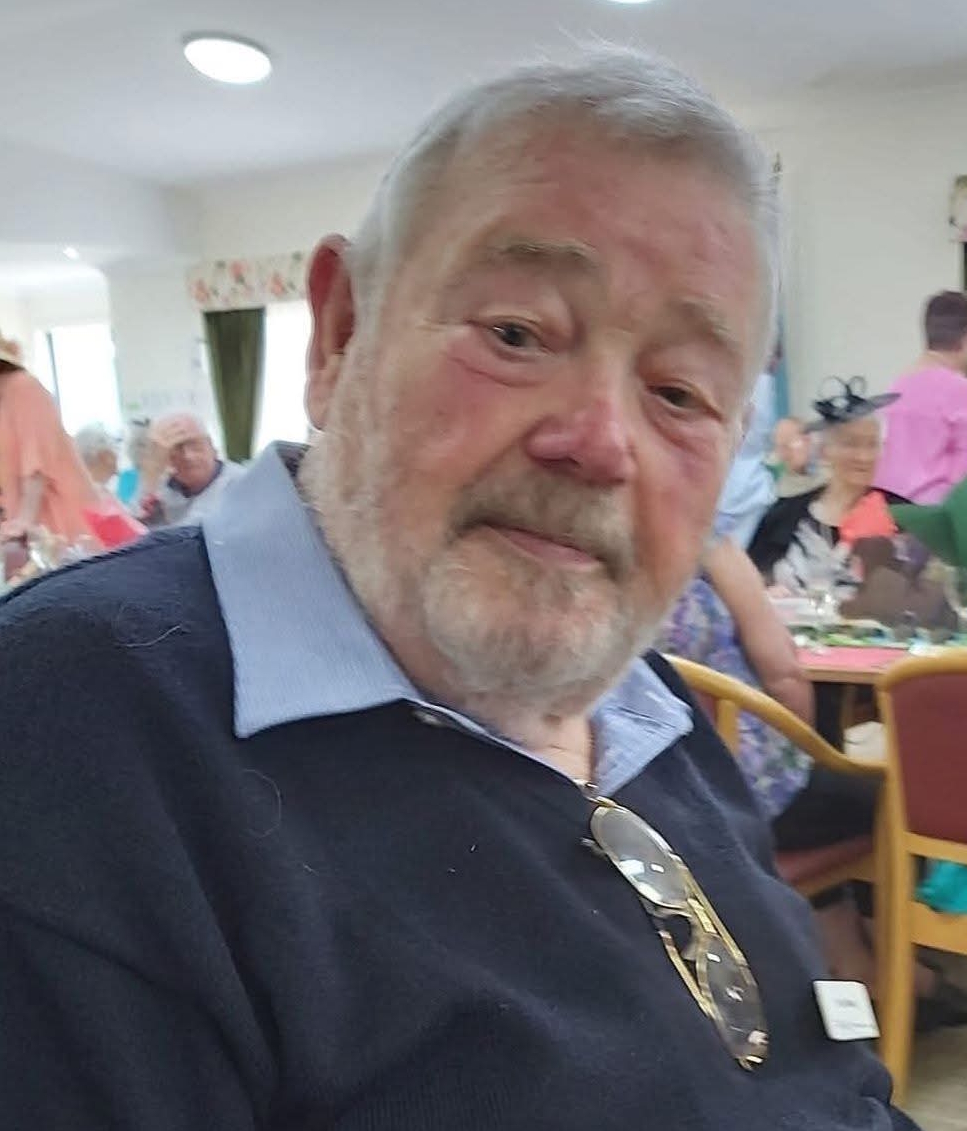
The Submarines Association of Australia sadly advises of the passing of long standing member Paul Meakin on the 20 th of June.
Paul Meakin was born in Surrey in the United Kingdom on 23 November 1942, during the dark days of the Second World War. As a youth he enlisted in the Royal Navy as an Ordnance Artificer (O/N DO50113D) at HMS Fishgard, followed by training at HMS Collingwood. He volunteered for submarines in the mid-1960s, joining the submarine service in 1966 and serving in the Porpoise-class submarine HMS Walrus before commissioning the Polaris ballistic missile submarine HMS Repulse (Starboard Crew), where he served from 1968 to 1971. He concluded his Royal Navy career as an Acting Chief Ordnance Electrical Artificer.
In late 1971, Paul transferred to the Royal Australian Navy as a Chief Petty Officer Electronic Technician Weapons (R111264). As the ETW rating did not exist within the Oberon Scheme of Complement—although some ETWs did fill ETP billets—he was posted to HMAS Cerberus in a shore-based surface ship ETW position. While at Cerberus, Paul persuaded more than a few electronic technicians under training to volunteer for submarine service. In 1979 he would sit on the selection board for apprentices into Nirimba, selecting several lads, including the current SAA webmaster Bob Hendrie. He clearly had an eye for finding talent.
1974 Paul posted to the Destroyer Escort HMAS Derwent in refit at Williamtown Dockyard. The WEEO of Derwent was the late Nick Hammond - Later Rear Admiral and Chief Naval Engineer, and the DWEEO a submariner Peter Moore. Nick and Peter were impressed by Paul and recommended him for a commission. Paul who was still a submariner at heart accepted the recommendation to become a Weapons Electrical Engineering Officer (WEEO) and on the 6th of October 1974, he was commissioned as a Special Duties Sub-Lieutenant in the Royal Australian Navy. He undertook Special Duties officer training in Australia and the United Kingdom in 1975, followed by Submarine Officer training at HMS Dolphin.
On his return to Australia, Paul joined HMAS Oxley on 8 January 1976 to qualify at sea as a submariner, after which he was posted to HMAS Otway as the submarine’s WEEO.
In 1979, Paul returned to the United Kingdom UK for training as a Submarine Trials Officer. This training was interrupted when the Commissioning WEEO of HMAS Orion resigned and needed to return to Australia. ORION had just completed her post build workups and subsequently Paul, with Sid Czabotar as his Part Three WEEO, was lent to ORION for six months for her delivery voyage from the UK to Australia. He left the submarine upon her arrival in Australia, returning to the UK to complete his Trials Officer training.
One incident on the trip to Australia lives on in submarine lore. When ORION was in Greece, Paul and the Navigator John Taubman bought Ouzo and the Steward stored the bottles in an empty tube marked unloaded. In the Red Sea we conducted watershots on that tube. Nobody checked if the tube was empty because as far as the TI was concerned he knew the tube was empty because nobody told him anything had been put in the tube. The watershots were conducted resulting with a number of drunk fish in the Red Sea and two annoyed officers whose Ouzo had been lost to the Oggin. When the submarine docked in CODOCK a few ouzo labels and broken bottles were found near the bowcap.
Trials and the introduction of equipment into service quickly became Paul’s forte. His contribution to the RAN was immense, and it remains a travesty that his efforts were never recognised with an Australian Honour. His pivotal role in the introduction of the Mark 48 torpedo and the Harpoon missile is perhaps best captured in the following account from his good friend and fellow WEEO, Peter Durrant, and Ted Curr.
What emerges from both Ted’s recollections and my own is a picture of Paul at a very particular moment in our naval history—a moment when the Royal Australian Navy was stretching itself, technically and professionally, to achieve things that had never been done before. Paul arrived in that environment as one of the so-called “RN retreads”—a term used half in jest, but in truth a mark of deep respect for the experience and professionalism that former Royal Navy submariners like Paul brought with them. It was a time when Australia and the UK shared the Oberon-class submarines, and that common heritage meant men like Paul could step straight into the most demanding parts of our service—and thrive.
Paul was a Weapons Electrical Engineering Officer, and in the mid-1980s, as a Lieutenant Commander, he found himself at the centre of one of the most challenging and important transitions the RAN submarine arm had ever undertaken. As the Encapsulated Harpoon Trials Officer, he led the work to integrate a completely new capability—the Harpoon anti-ship missile—into a conventionally powered submarine. This was not a straightforward upgrade; it was, in many respects, a leap into unknown territory. The Oberon's torpedo systems were rooted in much older design philosophies, very different from the systems the Americans had developed, and making them compatible with a modern missile required ingenuity, persistence, and a willingness to keep going when things didn’t quite align.
Paul led a small team of experienced sailors, many of them seasoned Chief Petty Officers, and together they put in countless hours—days and nights aboard HMAS Ovens, running trials, firing water shots alongside HMAS Platypus, and then progressing to live trials both at sea and, remarkably, within Sydney Harbour itself. It was painstaking, technical work, but also deeply practical—testing, adjusting, learning, and trying again. That effort ultimately culminated in successful missile firings in Hawaii, placing the RAN at the forefront of submarine-launched missile capability for non-nuclear navies.
But that achievement did not stand in isolation. As Ted Curr recalled, Paul’s contribution spanned a broader period of transformation during the Submarine Weapons Update Programme. He was part of the cohort that travelled to Bremen to work with the latest sonar systems, alongside a group of names many of us here will recognise. These were formative years—years in which the RAN developed not just new systems, but new confidence. From the early evaluation of advanced sonar, to HMAS Oxley's Mark 48 proficiency trials in 1981, through to the world-first submerged launch of the Harpoon missile by Ovens off Hawaii in 1985, and later the live firing of a Mark 48 torpedo that sank the ex-HMAS Colac off Sydney—Paul was there, contributing in a substantial and enduring way to each phase.
And yet, for all of that technical achievement, those who knew Paul don’t first remember the systems or the milestones—we remember the man. To his mates, he was “Grogbottle”—a nickname whose origins seem to have faded into naval folklore, but which somehow suited him perfectly. He was always ready for a conversation, always with a story to tell, more than capable of “swinging the lantern” and bringing a moment—whether at sea or ashore—back to life with humour and insight.
So, when we look back on Paul’s time with us, we see both sides clearly. We see an officer who stood at the leading edge of some of the most significant technical advances in our submarine service, helping to make the RAN a global pioneer. And alongside that, we see a shipmate—someone approachable, generous with his time, and deeply woven into the fabric of those he served with. That combination of professional excellence and personal warmth is what endures, and it is why Paul is remembered with such respect and affection today.
Paul’s contribution to the RAN did not end with the Oberon era. He was instrumental in the safe introduction of the Collins-class submarine into service, where his years of experience proved invaluable. I enjoyed more than a few glasses of wine with Paul in airport lounges on many a trip to or from Canberra, Perth or Adelaide over the Collins years.
In retirement, Paul lived in Western Australia, and he was a long serving member of both the Submarines Association of Australia and its Royal Navy counterpart, the RN Submariners Association (Australia).
Paul also served as an office bearer on the SAA WA Branch Executive and dedicated more than ten years to the state executive committee as Secretary. His commitment is further reflected in his and Enid's regular attendance at the Submarine Associations’ Memorial and social events, actively supporting the community and its members. In the three years leading up to the Centenary of Australian Submarines in 2014, Paul played a vital role in coordinating association activities throughout the country. As part of the organising committee, he contributed to the planning and execution of Centenary functions and Memorial Services. During this period, Paul also acted as the Overseas Submarine Veteran contact, consulting with member Associations from the United Kingdom, United States, Russia, Sweden, and Ukraine. He managed and coordinated the activities of these international groups, ensuring their effective participation in the celebrations.
Paul was actively involved in the day-to-day operations of the WA Branch, overseeing meeting agendas and minutes, and organising excursions to wineries and Defence establishments. He was instrumental in the development and publication of momentous events such as the March of the Australian Submarine Service Music, the Australian Submarine Centenary Ball, and the Freedom of Entry to the Australian Submarine Force
Paul passed away on 20 June following complications from a twisted bowel. He was predeceased by his wife, Enid.
My sincere thanks to Peter Durrant, Ted Curr, Peter O’Donohue, Ian MacKenzie, Sid Czabotar and Barry Grace for their input into this obituary.
Paul’s funeral will be held on Thursday the 9 th of July at 1430 at Leanne O’Deas’ Funeral Home 460 Pinjarra Road, Greenfields WA. Details of live streaming will be advised if it is available.
The SAA extends its sincere condolences to Paul’s sons Andy and Chris, their families and Paul’s numerous friends.
Tony Vine
National Secretary
Submarines Association of Australia